Hey everyone, let’s cut to the chase—if you’re in the market for vehicle bulletproof glass, chances are you’ve Googled “what’s the weight of this stuff” a dozen times, and most of the answers are either way too technical (read: jargon that makes your eyes glaze over) or totally outdated. As a vehicle bulletproof glass supplier who’s been in the game for years, I get it—weight isn’t just a random number. It affects everything from your vehicle’s fuel efficiency to how it handles, not to mention passenger safety. Let’s break this down like we’re chatting over a coffee, no boring tech mumbo jumbo. Bulletproof Glass for Vehicles
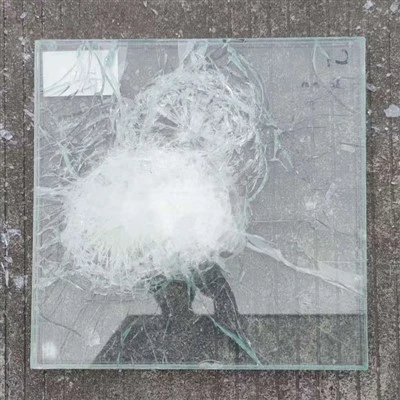
First off, let’s start with the basics: why does the weight of vehicle bulletproof glass even matter? You might think, “It’s just glass—how heavy can it be?” But here’s the thing: standard car glass (the regular windows you have on your sedan) is super light, usually around 4-5 mm thick, and weighs basically nothing compared to armor glass. But bulletproof glass isn’t one solid pane. It’s a sandwich, baby. Think of it as layers: you’ve got a hard outer layer (usually polycarbonate or tempered glass) that stops bullets from piercing, a soft middle layer (polyvinyl butyral, or PVB for short—you probably know this from car windshields, it’s the stuff that keeps glass from shattering everywhere) that binds it all together, and sometimes an inner polycarbonate layer for extra kick. That stack is what makes it work, but those layers add up.
Now, let’s talk numbers. I’m not gonna throw out vague “depends on type” stuff—let’s get specific. For light-duty vehicles, like SUVs or work vans that people use for everyday stuff but might need basic protection, the bulletproof glass is usually between 10 mm and 25 mm thick, and weighs anywhere from 12 to 30 kg per square meter. Wait, “per square meter”? Yeah, because glass weight is measured by area, not just thickness—so if your car window is 1 square meter (roughly 3.3 feet by 3.3 feet), that’s how much it weighs. For example, a basic Level 3 glass (that stops 9mm and .45 ACP bullets, super common for civilian use) is about 15 mm thick, weighs around 18 kg/m². That’s not too bad, right? You can still roll your window up and down without straining the motor too much.
But if you’re going higher—like Level 4, which stops .357 Magnum, or Level 5 for rifle rounds (AR-15, AK-47)—the thickness jumps, and so does the weight. Level 4 glass is usually 20-28 mm thick, weighing 24 to 35 kg/m². Level 5? That’s 30-40 mm thick, and you’re looking at 36 to 50 kg/m². For context, a standard car window (non-bulletproof) is only like 5 kg/m². So yeah, that’s a big difference. But before you panic—this isn’t a fixed number. There are ways to tweak weight without skimping on protection.
Wait, let’s address a common myth: thicker = heavier = better protection. Sort of, but not always. Modern polycarbonate layers are way lighter than traditional tempered glass, so we can swap out some glass for polycarbonate to cut weight without losing stopping power. For example, a hybrid glass (glass outer layer, polycarbonate inner) is usually 20-25 mm thick, weighs 20-28 kg/m²—same protection as a solid glass pane that’s 30 mm thick, which would be way heavier. That’s the stuff we push because no one wants to drive a brick.
Now, why does this weight matter for your vehicle? Let’s be real—add 100-200 kg of armor glass (that’s what a full set for a mid-size SUV adds up to) and your car’s handling changes. Steering gets heavier, brakes work a little harder, fuel efficiency drops by like 10-15% on average. If you’re using a van for business runs, that extra weight adds up over months in gas costs. But here’s the trade-off: we can shave weight without reducing ballistics. Our team’s been testing new polycarbonate composites that are 15% lighter than standard ones, so a full set of Level 5 glass now weighs around 42 kg/m² instead of 50—huge difference for fleet vehicles.
Another thing people ask: does bulletproof glass weight vary by vehicle type? Absolutely. A motorcycle side window? Super small, so even thick glass only adds a few kilos—way less of a hassle. A semi-truck windshield? That’s huge, so a full bulletproof windshield for a semi is like 20 kg, which is manageable, but side windows add another 15 kg each. For armored cash-in-transit vans, they go way heavier because they need Level 6 protection (stops rifle rounds and even armor-piercing bullets), so their glass can be 50+ mm thick, weighing 60+ kg/m². That’s why those vans look so tough—they’re built to take that weight.
Wait, let’s get into what goes into calculating exact weight. It’s not just thickness and material. The density of the materials matters too. Glass has a density of about 2.5 g/cm³, polycarbonate is 1.2 g/cm³—so swapping glass for polycarbonate cuts weight almost in half for the same thickness. PVB is only 1 g/cm³, so that’s the light binder holding it all together. Our engineers often adjust the number of layers: for a Level 3, we do 2 glass layers + 1 PVB, while a Level 4 is 3 glass + 2 PVB, or 2 glass + 1 polycarbonate + 1 PVB to keep weight down. That’s the kind of fine-tuning we do every day as a vehicle bulletproof glass supplier—we don’t just sell a slab of glass, we build it to fit your ride.
Now, let’s talk about real-world examples. Last year, a client came to us with a fleet of delivery vans—they were using standard Level 3 glass, but were complaining about gas costs going up $200 a month per van. We swapped their solid glass panes for hybrid glass (glass outer, polycarbonate inner) same Level 3 rating, same protection, and cut each window’s weight by 7 kg. The vans’ fuel efficiency went up 12%, and they saved almost $180 a month per van. That’s the stuff that matters—weight isn’t just a number, it’s a cost saver.
Another client: a private security team with SUVs that needed Level 4 protection. They initially thought they’d have to add reinforced suspension to handle the extra weight, but we used our lightweight polycarbonate blend, so the total glass weight added only 160 kg per SUV—way less than the 220 kg they were expecting. They didn’t need to modify the suspension at all, which saved them thousands in extra work.
Wait, is there a downside to making glass too light? Yeah, you have to make sure the protection doesn’t drop. If you skimp too much on layers, you might get glass that’s light but can’t stop a 9mm. That’s why we don’t cut corners—every weight adjustment is paired with ballistics testing. We test every batch of glass against NIJ standards (the National Institute of Justice, that’s the standard for bulletproof gear) so you know it works. No one wants a window that breaks if someone fires a shot.
Let’s wrap up the key points here, because I know I threw a lot at you. First, vehicle bulletproof glass weight is measured in kg/m², usually 12-50 kg/m² depending on protection level (Level 3 = ~18 kg/m², Level 5 = ~36-50 kg/m²). Second, it’s a sandwich of glass, PVB, and often polycarbonate—materials and layers determine weight. Third, lighter options exist (hybrid glass, polycarbonate blends) that keep protection high while saving you on fuel and vehicle handling. Fourth, weight varies by vehicle type: small windows = less weight, big windshields = more, heavy-duty use = extra weight.
Now, if you’re thinking about getting bulletproof glass for your vehicle—whether it’s a personal SUV, work van, or fleet—don’t just go by price. Ask about weight. A cheaper glass might be heavier, costing you more in gas long-term. As a vehicle bulletproof glass supplier, we don’t just sell product—we help you pick the right balance of protection and weight for your needs. Whether you’re a small business owner looking to protect your delivery team, a private individual wanting peace of mind, or a fleet manager needing consistent, reliable armor, we can walk you through exactly what weight works for your ride.

If you’ve got questions about specific vehicle types, protection levels, or want a customized quote for glass that’s light enough for your needs but tough enough to stop threats, don’t hesitate to reach out and connect with our team. We’re here to help you make the smart choice without the guesswork.
Bulletproof Glass for En1063 Standard References
National Institute of Justice. (2020). Ballistic Resistance of Body Armor. NIJ Standard 0101.06.
Society of Automotive Engineers. (2019). Lightweight Armor Materials for Automotive Applications. SAE International Journal of Materials and Manufacturing.
Bulletproof Technical Institute. (2021). Vehicle Armor Glass Weight Optimization. Annual Report on Ballistic Materials.
Shaoxing Transparent Armoring Materials Co., Ltd.
As one of the most professional bulletproof glass for vehicles manufacturers and suppliers in China, we’re featured by quality products and good service. Please rest assured to buy durable bulletproof glass for vehicles made in China here from our factory. We also accept customized orders.
Address: No.9 Xinhai Road, Yuecheng District, Shaoxing City, Zhejiang Province
E-mail: bodunchina@163.com
WebSite: https://www.king-armor.com/
