If you’ve ever dabbled in semiconductors, solar panels, metallurgy, or even just Googled how computer chips are made, you’ve probably stumbled across metal silicon (wait, hold up—sometimes it’s also called metallurgical-grade silicon, but that’s a whole other side note). A question that pops up all the time in my DMs, comment sections, and random warehouse chats is: “What’s the actual chemical formula for metal silicon?” It’s such a straightforward question, but you’d be shocked how many people—even folks who work in industries that use it every day—get this wrong. Let’s break this down, plus sprinkle in some real vendor tea that you won’t find in a basic textbook. Metal Silicon

First off, let’s clear up the big misconception. I’ve been supplying metal silicon for 8 years now, and I can’t tell you how many times a customer has asked if it’s “Si₂” or something weird, or confused it with silicone (spelled with an ‘e’ at the end, not an ‘i’—major pet peeve). Metal silicon, the stuff we sell, is basically elemental silicon, right? Wait, but hold on—pure elemental silicon is just Si, right? But why is it called “metal” silicon? Because here’s the thing: elemental silicon has a weird split personality. At room temperature, it’s a metalloid—meaning it’s not quite a metal, not quite a nonmetal, it’s that awkward middle kid in the periodic table’s group 14 (right below carbon, above germanium). But when we’re talking about metal silicon, that’s the industrial grade, not the super-pure 99.999% stuff that goes into semiconductors. Oh, and let’s get this straight: the “metal” label here is a holdover from the old days when people grouped semimetals with metals loosely, not because it’s a true metal. Got it? So the base formula of pure metal silicon is Si. That’s it. No subscripts, no tricks. But wait—before you close this tab, let’s talk about the messy, real-world stuff because no one tells you that part.
When we sell metal silicon, it’s not 100% pure. I’d be lying if I said our product is just straight Si. The metallurgical-grade metal silicon we supply is usually between 97% and 99% pure, depending on the grade. The rest is impurities like iron, aluminum, calcium, and trace amounts of carbon. Those impurities are actually intentional in some ways? Wait, no—they’re byproducts of the smelting process. How is metal silicon made anyway? We smelt quartz (which is SiO₂, silica) in an arc furnace with coke and wood chips at super high temps, like 1,900°C. The reaction strips the oxygen out of the SiO₂, leaving that silicon. But you can’t do that without leaving a little extra of the other elements that were in the quartz or the coke. So the formula for industrial metal silicon isn’t just Si—it’s Si plus those minor impurities. But when people ask for the chemical formula of metal silicon, they’re almost always referring to the base elemental component, which is Si. That’s the answer you’ll see in every textbook, but I wanted to add the vendor context because no one explains that the “industrial grade” is a tiny bit messy.
Wait, but let’s get into why this matters for my customers. Last year, we had a customer who made solar panels come back to us super frustrated. They’d ordered what they thought was 99.9% metal silicon (wait, that’s actually another grade—there’s metallurgical-grade (~98% Si) and then higher-purity grades for silicon metal used in alloys, even for semis), and their whole batch of ingots had defects. Turns out, they’d confused metal silicon (Si) with silicon carbide (SiC), which is a completely different formula. Oops. They thought the “metal” part meant it was compatible with their high-heat process for their solar wafers, but SiC is way harder and isn’t used the same way. That’s why getting the formula right isn’t just a chemistry trivia question—it saves people thousands in lost material and downtime.
Another common mix-up: silicone. I’ve had a few new buyers email me asking for “metal silicone” because they thought it was a metal version of silicone (which is a polymer, made of Si, oxygen, carbon, and hydrogen). No, dude. Metal silicon is elemental Si; silicone is rubbery stuff used for bakeware or caulking. Total different balls of wax. That confusion alone makes half the question worth answering, because it’s the kind of mix-up that derails a whole project before it even starts.
Now, let’s talk about the real nitty-gritty of the chemical structure, because that’s why it works the way it does. Elemental silicon, whether it’s the pure lab grade or our industrial metal silicon, has a covalent network structure. So each silicon atom bonds to four other silicon atoms in a giant lattice, kind of like diamond, but softer (well, metal silicon is brittle, to be specific). That’s why it’s a semiconductor, why it’s used to make aluminum-silicon alloys for car parts, why it’s the base for polysilicon in solar panels. The formula Si just represents that each unit is one silicon atom, even though it’s a giant network—so in chemical terms, the empirical formula is Si, which is what everyone references.
Wait, but I should also mention the different grades because that’s where suppliers like me come in. We don’t just sell one kind of metal silicon. Grade 2202 is the most common—98.5% Si, 0.2% iron, 0.2% aluminum, 0.02% calcium. Grade 3303 is higher purity, 99% Si, lower iron and aluminum. Then there’s Grade 441, which is 99.99% Si for semiconductors? No, wait no—Grade 441 is actually for making silicones and polysilicon feedstock. The super pure semiconductor-grade is polycrystalline silicon, which is like 99.9999999% Si, but that’s a different product entirely. So when a customer asks for the chemical formula of metal silicon, they’re usually referring to either the base element Si or the specific grade’s composition, but base is Si.
I get questions like this all the time because metal silicon is a niche product, but it’s everywhere. It’s in the aluminum cans you hold (adds strength and corrosion resistance), it’s in the silicone caulk in your bathroom (wait, no—silicone is made from metal silicon, right? We supply the raw material for that), it’s in the solar panels on people’s roofs, it’s in the computer chips that run your phone. So when you ask for its formula, it’s not just a random chemistry fact—it’s the backbone of a huge industry that most people don’t even know exists.
Let me also share a little supplier hack I’ve learned over the years. If a customer emails me asking for “metal silicon formula” without context, I always follow up to ask what they’re using it for. If they’re making alloys for car parts, we recommend Grade 2202 because the small amount of impurities don’t affect the alloy’s strength. If they’re making silicones for medical devices, we send Grade 3303 because the lower impurities mean it meets FDA standards. If they’re working on semiconductors, we point them to our purified polysilicon, not standard metal silicon. The base formula is Si, but the grade matters way more for actual use cases.
Wait, another thing that trips people up: some people call it “metallurgical silicon” interchangeably with metal silicon, and yes, that’s the same stuff. The only time the term “metal silicon” is confusing is when people mix it up with the metalloid label, but as I said earlier, it’s a historical name. It’s not a true metal—true metals like iron or copper have different atomic structures, conduct heat and electricity way better, are malleable. Silicon is a metalloid, but industrial suppliers have stuck with the “metal” name for decades, so that’s what everyone uses.
I think the big takeaway here is: if someone asks you for the chemical formula of metal silicon, the short answer is Si. The long answer is that it’s almost always found in industrial grades with minor impurities, so the actual composition is Si plus trace elements, and its structure is a giant covalent network, so the empirical formula is still Si. And if you’re actually in the market to buy it (hint hint), don’t just rely on Google’s basic answer—talk to a supplier who knows the grades, the impurities, and how it works for your specific project.
I’ve seen too many people buy the wrong grade of metal silicon because they just looked up the formula and ordered the cheapest generic stuff, only to have it not work for their application. Last quarter, we had a customer in the steel industry who ordered metal silicon meant for alloys, but he needed it for deoxidizing steel, which requires a higher purity. He almost lost a big contract because he didn’t check the grade, and only caught it when his process wasn’t working. That’s why I always emphasize that the formula is a starting point, not the whole story.
So to wrap this up, let’s make sure we’re all on the same page. Metal silicon (aka metallurgical-grade silicon) has a base chemical formula of Si, representing elemental silicon. Industrial grades will have small amounts of iron, aluminum, calcium, and other impurities, but when referencing its core chemical identity, it’s just Si. The confusion with silicone, silicon carbide, and higher-purity semiconductor-grade silicon is super common, but knowing that base formula helps avoid a ton of mix-ups.
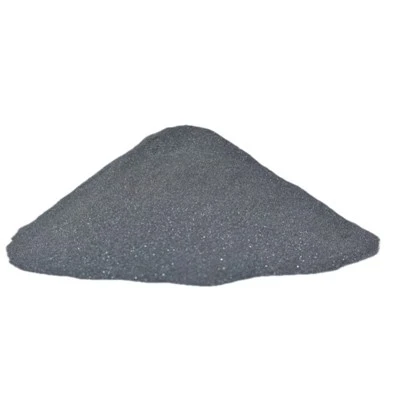
If you’re working on a project that needs metal silicon—whether it’s making alloys, solar components, silicones, or anything else—hit us up to chat through the right grade for your needs. We’ve got years of experience, we don’t overcomplicate the formula stuff, and we can hook you up with exactly what you need without the headache of testing the wrong products.
Other Ferroalloy References
- CRC Handbook of Chemistry and Physics, 102nd Edition, CRC Press, 2021, Elemental Silicon entry.
- “Metallurgical Grade Silicon: Production and Applications,” International Zinc and Silicon Institute, 2019.
- Periodic Table of the Elements, IUPAC, Group 14 entry, Silicon section.
Anyang Baitengxin Metal Co., Ltd.
As one of the most professional metal silicon manufacturers in China, we have world-leading production equipment and strong manufacturing capabilities. Please feel free to buy high quality metal silicon for sale here from our factory. Good service and reasonable price are available.
Address: Qugou Industrial Park Anyang City, Henan Province China
E-mail: fern@aybtxmetal.com
WebSite: https://www.aybtx-metal.com/
