Hey there, if you’re reading this, you’re probably deep in the weeds of your compressed air system, and you’ve heard that refrigerated air dryers are the go-to for keeping your lines free of moisture—but you’re also wondering, how much energy do these things actually suck down? As someone who’s been selling refrigerated air dryers for 10+ years (I’m the guy you probably yelled at when your old dryer was spiking your utility bill last month), I get it. Most people treat a dryer like a “set it and forget it” part of their system, but energy use is where a lot of hidden costs creep in. Let’s break this down like we’re chatting over a coffee, no jargon, just real stuff. Refrigerated Air Dryer
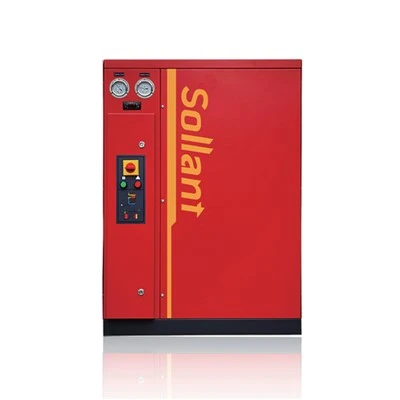
First, let’s get one thing straight: I see customers mix this up all the time, so let’s nip it in the bud. A refrigerated air dryer doesn’t run on power the same way, say, a big industrial compressor does. Most people think “it’s just a fan and a cooler, so it uses nothing”… nope. It’s a closed-loop system, and every part of that loop eats energy—sometimes more than you think. Let’s start with the basics of how these things work, because the energy math ties directly to that. Refrigerated dryers cool compressed air to around 35-40°F, right? That’s where all the water vapor condenses into liquid, which we then drain. To do that, they use two main components: a compressor for the refrigerant (the part that’s basically the dryer’s “heart”) and a fan to pull ambient air over the refrigerant coils, plus a drain valve that runs 24/7 (or should, if it’s working right).
Now, here’s the number you’re gonna care about: average energy use. I’ve tracked this for every dryer we sell, because it’s the first question buyers ask after “does it get rid of moisture?” For a typical medium-sized dryer—say, one that handles 100 to 200 standard cubic feet per minute (SCFM), which is what most small to mid-sized manufacturing shops, auto body garages, or small processing plants use—you’re looking at 0.5 to 1.2 kW of power draw. Wait, that’s low? Hold on, don’t get excited too fast. Let’s put that in perspective. If that dryer runs 24/7, that’s 8,760 hours a year. Multiply by 1 kW, that’s 8,760 kWh annually. At the average US commercial electricity rate of ~12 cents per kWh, that’s around $1,050 a year. For a bigger dryer—like 500 SCFM, which serves larger operations—that jumps to 2 to 4 kW, so $2,100 to $4,200 a year. That’s not chump change, especially if you have multiple dryers, or you’re in a state with higher electricity costs (hello, California, where that 1 kW dryer becomes ~$1,600 a year).
But wait—those numbers are just the baseline. The biggest mistake I see is customers comparing this to desiccant dryers, which are way more energy-hungry. Desiccants can run 3 to 5 times more, because they have to heat up to regenerate. But refrigerated dryers don’t exist in a vacuum. Their actual energy use depends on three huge factors that most people never check, and that’s where the real surprises happen. Let’s go through those, because if you’re buying a dryer, these are the things that’ll make your annual bill go up or down by hundreds, even thousands, of dollars.
First: the inlet temperature of your compressed air. If your compressor’s pumping air at 150°F (which is standard for many older units) and feeding that straight into your dryer, that dryer has to work way harder to cool it down to 35°F. I’ve had a customer with a 100 SCFM dryer that was using 1.8 kW for no reason—turns out their compressor was dumping hot air right into the dryer’s inlet, so the dryer was fighting a losing battle. That bumped their annual bill up from ~$1,000 to almost $1,900, just because of a 20°F temperature spike. The fix? Add a heat exchanger between the compressor and dryer to pre-cool the air, and that drops the dryer’s energy use by 20-30% almost instantly. It’s like if you’re trying to cool down a pot of boiling water vs. lukewarm water—way more effort for the hot pot.
Second: ambient temperature around the dryer. These dryers need to pull in air to cool their refrigerant coils, right? If you’re sticking your dryer in a hot, stuffy utility closet where it’s 100°F year-round, that fan has to spin faster, the refrigerant has to work harder, and energy use goes up by another 15-25%. We had a customer in a Texas warehouse learn this the hard way—they moved their dryer from the back of the warehouse (where it was in the sun, 98°F) to a shaded side wall, and their energy bill for the dryer dropped by $350 in a month. That’s like leaving your fridge door open all day because it’s in a hot room—your fridge has to work way more, same idea here. Also, make sure the fan isn’t blocked by boxes or pallets—we see that all the time, operators don’t even notice they’re obstructing airflow.
Third: the drain valve. This is the part that most people overlook, but it’s a massive energy drain if it’s broken or misconfigured. A lot of cheap dryers come with a manual drain that someone forgets to open, or a cheap auto-drain that leaks air and wastes energy, or drains water when it doesn’t need to. Wait—how does a drain use energy? Well, if the drain is working, it’s a tiny electric solenoid that opens every few minutes to dump the condensed water. But if it’s leaking air (which it often does if it’s old or low-quality), that means your dryer is losing compressed air that you paid good money to make, and the system has to run more to make up for it. I’ve seen a 100 SCFM dryer with a bad drain that was wasting 10% of the dryer’s total energy just to compensate for the air leak. Invest in a good, zero-loss auto-drain (they’re not that expensive) and you’ll cut that drain-related loss by almost all of it.
Now, let’s talk about the numbers side of things—because numbers don’t lie, but only if you’re using the right ones. The industry standard for refrigerated air dryer energy efficiency is called EER, or Energy Efficiency Ratio, but I call it the “real world EER” because a lot of brands will give you a lab number that’s way higher than what you get in your facility. A good, modern, properly sized refrigerated air dryer will have an EER of around 4 to 6. What does that mean? For every kW of power it uses, it can remove 4 to 6 pounds of water vapor from your compressed air. A cheap, old, undersized dryer might have an EER of 2 or 3—meaning you’re paying twice as much to get the same moisture removal. That’s why we push our customers to size the dryer correctly, not just buy the smallest one that fits their SCFM. If you undersize it, it’s working non-stop, spiking energy use and not even drying the air right. Oversize it, and it cycles on and off too much (that’s called short-cycling) which wears it out faster and uses more energy than a properly sized unit. I can’t tell you how many times a customer came to us with a dryer that was too big, and we got them a correctly sized one that cut their energy use by 35% overnight.
Wait, let’s clear up another myth: some guys will tell you that the only energy use is the refrigerant compressor, but that’s not true, especially for larger dryers. For dryers over 500 SCFM, you might have a heat of compression recovery feature—wait, no, that’s not what we’re talking about here, but even the fan motor for the condenser can add 0.5 to 1 kW of use, depending on the size. Also, if your dryer has a refrigerant re-heat function (which is good for preventing condensation in your pipes downstream), that adds a tiny bit of energy, but it’s worth it because it saves you from having to fix moisture-related issues like rusted pipes, frozen lines, or product defects. I had a customer in a food processing plant a while back who skipped re-heat, and they had a batch of packaged goods ruined because moisture got in, costing them $12k. The extra $150 a year in energy for re-heat? That was a no-brainer.
Now, let’s talk about real-world examples, because numbers are fine, but let’s make this relatable. Take a small auto body shop: they have a 200 SCFM dryer, run 12 hours a day, 6 days a week, electricity at 10 cents per kWh. Old, cheap dryer from 10 years ago: uses 1.5 kW when running, cycles 50% of the time (because it’s oversized). Annual energy use: 1.5 kW * (12652) hours * 0.5 = ~2,808 kWh, so ~$281 a year. That’s not bad, but if they get a new, correctly sized dryer with a good EER, that drops to 0.8 kW, runs 70% of the time (no more short-cycling), so ~1.560 kWh, ~$156 a year. That’s $125 a year saved, just from upgrading. Multiply that over 10 years, that’s $1,250—enough for a new set of tools, or a holiday bonus for the techs.
Another example: a medium-sized metal fabricating shop with a 500 SCFM dryer, runs 24/7, in Ohio (electricity ~13 cents/kWh). Old dryer: 3.5 kW, inlet temp 140°F, hot utility room. Annual use: 3.5 * 8,760 = ~30,660 kWh, ~$3,985 a year. Fix the inlet temp with a heat exchanger (1 hour of installation, $200), move the dryer to a shaded spot, replace the drain: energy use drops by 28%, so ~$2,869 a year. That’s over $1,100 saved, no new equipment, just small tweaks.
Wait, but what about peak demand? Oh, right! Most industrial electricity bills have a peak demand charge—like, if you use more than 10 kW at any time during the month, you pay a premium per kW. That’s where some refrigerated dryers come with variable-speed drive (VSD) compressors, which match the dryer’s cooling output to how much moisture is actually coming in. So if you’re only running your shop half the time, the VSD kicks the dryer down to low power, instead of running at full blast even when there’s less air to dry. I had a customer with a VSD dryer cut their peak demand charges by $450 a year, just from that feature. It’s not a huge upcharge, but for operations on tight budgets, it’s worth every penny.
Now, let’s get to the part that matters most for you: how to make sure you’re not overpaying for your dryer’s energy. First, don’t buy on price alone. The cheapest dryer might seem like a deal, but its energy use will eat up that savings in 2 years. Second, get a load calculation, not just an SCFM number. A lot of guys just go “my compressor is 200 SCFM, so I need a 200 SCFM dryer” but forget about inlet temp, ambient temp, and peak demand. Third, do the tiny maintenance stuff every 6 months: clean the condenser coils (dust and dirt build up like crazy, making the fan work harder), check the drain valve, make sure the airflow isn’t blocked. It takes 10 minutes, and it can cut energy use by 10-15% alone.
Before I wrap this up, I want to be clear: I’m not here to sell you a $10k dryer you don’t need. I’m here because I’ve seen too many customers get burned by bad advice, old equipment, and hidden energy costs. If you’re tired of getting blindsided by your utility bill, or you’re dealing with moisture issues that cost you money, I can help. We do free, no-obligation audits of your compressed air system—we’ll come out, check your current dryer, measure inlet and ambient temps, look at your drain valve, and give you a real number on exactly how much energy you’re wasting, and what we can do to fix it. No sales pitches, no fine print, just straight talk about what works for your shop or plant.
If you’re ready to stop wasting money on a dryer that’s costing you more than it should, reach out. We’ll help you size the right dryer, upgrade if you need it, or just tweak what you already have to cut those energy costs. At the end of the day, this isn’t about selling a product—it’s about helping you keep your costs low and your operations running smooth, no hidden surprises.
Filter and Separator Series References: Compressed Air and Gas Handbook, 7th Edition; U.S. Department of Energy, “Energy Efficiency in Compressed Air Systems”; Process Cooling Magazine, 2022 Refrigerated Air Dryer Efficiency Report; Air Treatment Manufacturers Association, Industrial Dryer Energy Use Guidelines.
Shanghai Sollant Energy Saving Technology Co., Ltd.
As one of the most professional refrigerated air dryer manufacturers and suppliers in China, we’re featured by quality products and good service. We warmly welcome you to buy bulk advanced refrigerated air dryer from our factory. If you have any enquiry about cooperation, please feel free to email us.
Address: No.215, Songri Center, Beihongqiao, Jiading District, Shanghai, China
E-mail: info4@sollant.com
WebSite: https://www.sollanttreatment.com/
