If you’ve ever stood on the manufacturing floor of a 5G base station, a medical imaging device like an MRI scanner, or even a high-end server rack, you’ve probably glanced at the tiny, unassuming connector that links critical signals or power between two modules. For anyone in my line of work—leading a connector supply business with 12 years of hands-on experience in RF and high-frequency components—those connectors aren’t just small plastic and metal parts. They’re the make-or-break link that determines if a $1M piece of equipment works as intended, or fails mid-operation in the field. Connector

I still remember a time 8 years ago when a client working on military airborne radar reached out in a panic. Their previous connector supplier had delivered parts that dropped signal integrity at 18 GHz, leading to failed flight tests and millions in delayed testing timelines. The client had been shopping around for “any cheap high-frequency connector” and learned the hard way that specs on a datasheet don’t always translate to real-world performance. That’s the story that’s stuck with me ever since, and it’s why I’ve built our business around making sure engineers don’t make the same rushed mistake. Choosing a connector for high-frequency applications isn’t just about picking a part that fits your design footprint—it’s about understanding how that part interacts with the full spectrum of your use case, from signal loss to environmental stressors.
First, let’s cut through the jargon and get to the core metrics that define a high-frequency connector. When we talk about “high frequency,” most engineers mean signals above 1 GHz, but for applications like 5G mmWave (24–100 GHz), automotive radar (77–81 GHz), or satellite communications, that number climbs even higher. The two non-negotiable metrics here are insertion loss and return loss, and I can’t overstate how often even senior engineers mix these up. Insertion loss is how much signal the connector eats up as it passes through—think of it like a drain in a sink: the bigger the drain, the more water you lose. For high-frequency signals, even a small insertion loss (say, 0.2 dB per connector at 28 GHz) adds up over a chain of 10 or 20 connectors, translating to weaker signals at the end of your circuit, which can cause dropped calls, blurry medical images, or even equipment failure. Return loss, on the other hand, is how much signal bounces back from the connector instead of passing through. A high return loss (low dB value here, specifically negative numbers like -25 dB) means less signal reflection, which prevents signal distortion and standing waves that can fry sensitive components.
In my years working with clients, I’ve seen how easily these metrics get overlooked in favor of price. A few years back, a team designing small cell base stations came to us with a part they’d sourced from a overseas supplier that had a datasheet claiming 0.15 dB insertion loss at 28 GHz. When we tested it in our in-house RF lab, we found the actual insertion loss was 0.42 dB—almost three times the stated value. The difference? The supplier’s datasheet tested that part in an ideal lab environment, with perfect mating and clean parts, while our test used real-world mating conditions and standard material grades. That’s why the second big step in choosing a connector is verifying those specs, not just taking them at face value. For our clients, we always run pre-shipment tests in our lab, and we share the full test report with them, no fine print.
Next, you need to match the connector’s impedance to your system. Impedance is the measure of opposition to alternating current, and for high-frequency signals, mismatched impedance is one of the biggest causes of signal reflection. The most common impedance for high-frequency connectors is 50 ohms, which is the industry standard for RF and most telecom applications, though some specialized uses (like video or high-speed data) use 75 ohms. I once worked with a broadcast engineering team that tried to use a 50-ohm connector for a 75-ohm HD video feed. The result was a fuzzy, pixelated feed that cost the team a full day of on-site testing to troubleshoot. By the time we switched to properly matched 75-ohm connectors, the problem was solved in 10 minutes. The lesson here is simple: never assume impedance is standard. Always check your system’s required impedance, and make sure your connector matches that exactly—even a 10-ohm mismatch can cause serious signal issues at high frequencies.
Once you’ve nailed down impedance and loss metrics, it’s time to think about the connector’s physical design, especially mating interface and material choice. For high-frequency applications, the mating interface has to be precise—even a tiny misalignment, like a bump or a smudge of dirt on the contact surface, can cause major signal loss. That’s why many of our high-frequency connectors use precision-machined contacts, with tolerances measured in microns, not millimeters. For example, our SMA connectors, a workhorse for applications up to 18 GHz, use a threaded mating interface that locks the two halves together tightly, preventing any accidental movement or misalignment that would degrade performance. For higher frequencies, like 28 GHz and above, we offer SMP connectors, which use a push-on mating design that’s smaller and lighter, ideal for compact devices like 5G phones or wearable medical sensors.
Material choice is equally important. The contact pins (the parts that actually touch when the connector mates) are usually made of beryllium copper or phosphor bronze, plated with gold or silver. Gold is a better choice for corrosion resistance, especially in harsh environments like outdoor 5G towers or marine equipment, because it doesn’t tarnish like silver. But gold is softer, so for applications that see frequent mating and unmating (like test equipment), silver plating might be a better option because it’s more durable. The insulator that separates the two contacts (to prevent short circuits) is another key part—we use PTFE (Teflon) or high-performance plastics like LCP (liquid crystal polymer) for high-frequency connectors, because these materials have low dielectric loss at high frequencies, meaning they don’t absorb signal like cheaper plastics. I once had a client use a connector with a standard nylon insulator for a 38 GHz application, and the dielectric loss was so high that the signal was unreadable. Swapping to an LCP insulator fixed the issue immediately, and cost just 10% more than the nylon part—well worth the investment for a working design.
Environmental factors are another piece of the puzzle that many engineers overlook when choosing a high-frequency connector. If your connector is going to be used outdoors, in a hospital, in a factory, or in a satellite, it has to withstand temperature extremes, humidity, vibration, and even dust or water. For example, a connector used in a automotive radar system has to survive temperatures from -40°C to 125°C, plus constant vibration from driving at high speeds. We offer sealed high-frequency connectors rated IP67, which means they’re dust-tight and can be submerged in water for up to 30 minutes, for outdoor telecom and industrial applications. For space applications, we have connectors that are radiation-hardened, because space radiation can degrade materials over time and cause signal failure. I still remember working with a satellite component manufacturer a few years ago; they thought their standard high-frequency connectors would work in low Earth orbit, but we had to swap them for radiation-resistant parts after testing showed the original connectors would fail after just 2 years in space. The extra cost was minimal compared to the loss of a $50M satellite.
Size and weight matter too, especially in applications where space is at a premium, like drones, wearables, or small cell base stations. A few years back, a drone manufacturer came to us needing a high-frequency connector for their new long-range communication drone. Their original design used a standard SMA connector, which was too big and heavy, adding extra weight that reduced the drone’s flight time by 15%. We suggested our miniature SMPM connectors, which are 50% smaller and 70% lighter than SMA, and the drone’s flight time increased by 12%—a game-changer for their product. So when choosing a connector, don’t just focus on performance; make sure it fits your design’s size and weight requirements without sacrificing those critical high-frequency metrics.
Testing and certification are the final, make-or-break steps. Any good connector supplier should be able to provide you with third-party test reports for their high-frequency connectors, showing that the parts meet industry standards like MIL-STD (for military applications), ISO (for general manufacturing), or IPC (for electronics). For aerospace or medical applications, certification like CE, FCC, or FDA approval is non-negotiable, because those industries have strict regulatory requirements. We invest heavily in our in-house RF lab, where we test every batch of high-frequency connectors for insertion loss, return loss, impedance, and environmental performance, and we work with independent third-party labs for additional certification when required. I’ve seen too many engineers cut corners on testing, only to have their product fail regulatory inspections or field tests, leading to costly recalls and delays.
Now, let’s circle back to that story I told at the start, about the military radar client. After we worked with them to select the right high-frequency connectors—running full tests to verify their 18 GHz performance, matching their impedance, and choosing a material that could withstand the extreme conditions of airborne flight—they came back a year later with another order, and referred two more clients to us. That’s the part of this business that matters most: building trust by delivering connectors that actually perform as advertised, not just on a datasheet.
At the end of the day, choosing a high-frequency connector isn’t a task to rush. It’s a decision that impacts the performance, reliability, and cost of your entire product, no matter what industry you’re in. Take the time to understand your system’s frequency range, required impedance, signal loss tolerance, environmental conditions, size requirements, and certification needs. Don’t just pick the cheapest part, and don’t take a supplier’s datasheet specs at face value—ask for test data, ask questions, and work with a supplier that has hands-on experience in high-frequency applications, not just a catalog of parts.
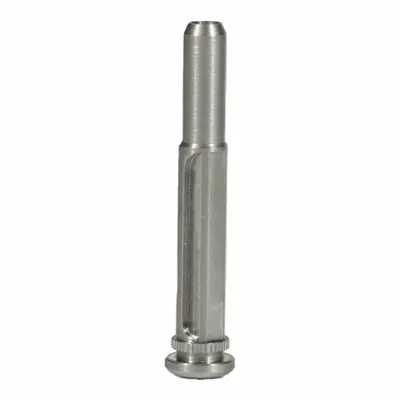
If you’re in the middle of designing a high-frequency product, whether it’s 5G gear, medical imaging, aerospace components, or automotive electronics, and you’re not sure which connector is right for you, I’m here to help. We’ve worked with hundreds of engineers across industries, and we can run custom tests, provide full spec reports, and guide you every step of the way to find a connector that fits your exact needs, on time and on budget. Reach out to our team to discuss your project and get started.
Metal Nut References:
- Hickman, I. (2019). RF Connector Handbook: Theory and Applications. Newnes.
- International Electrotechnical Commission (IEC). (2021). IEC 60169-2: Radio-frequency connectors – Part 2: Sectional specification for RF coaxial connectors with inner diameter of outer conductor 4.1 mm (0.162 in) with screw coupling, typically for use at frequencies up to 18 GHz (type SMA).
- Institute of Printed Circuits (IPC). (2020). IPC-WHMA-A-620: Requirements and acceptance for cable and wire harness assemblies.
- Zappe, J. (2022). High-Frequency Connector Performance for 5G and mmWave Applications. IEEE Transactions on Microwave Theory and Techniques, 70(12), 5219–5230.
Kunshan Haizhijie Precision Hardware Co., Ltd.
As one of the most professional connector manufacturers and suppliers in China, we’re featured by quality products and good price. Please rest assured to buy customized connector made in China here from our factory. Also, pricelist is available.
Address: No. 367, Kangzhuang Road, Zhou City Town, Kunshan City, Jiangsu Province, China
E-mail: wzhshui@sina.com
WebSite: https://www.hzhjmetal.com/
