As a supplier of small air separation units, I am often asked about the working principle of these remarkable machines. Small air separation units play a crucial role in various industries by separating the components of air – such as nitrogen, oxygen, and argon – to meet specific industrial needs. In this blog, I will delve into the scientific and technical aspects of how a small air separation unit operates. Small Air Separation Unit
1. Introduction to Air Separation
Air is a mixture of several gases, primarily nitrogen (about 78%), oxygen (about 21%), argon (about 0.93%), and trace amounts of other gases like carbon dioxide, neon, helium, and krypton. The process of separating these gases is essential for many industrial applications. For example, oxygen is used in metal cutting, welding, and in the medical field; nitrogen is widely used for food preservation, inerting in chemical processes, and electronics manufacturing; and argon is used in welding and as a protective gas in the production of semiconductors.
2. Basic Working Principle of Small Air Separation Units
The working principle of a small air separation unit is based on the differences in the boiling points of the various components of air. The main steps involved in the air separation process are air compression, purification, cooling, and distillation.
Air Compression
The first step in the air separation process is to compress the incoming air. A compressor is used to increase the pressure of the air. Compression not only reduces the volume of the air, making it easier to handle, but also raises its temperature. The compressed air typically has a pressure ranging from 5 to 10 bar, depending on the design of the air separation unit.
The compression process is crucial as it provides the energy required for the subsequent steps. However, the heat generated during compression needs to be removed to prevent damage to the equipment and to ensure the efficiency of the separation process. This is usually done by passing the compressed air through a cooler, which uses water or air as a cooling medium.
Air Purification
After compression and cooling, the air contains various impurities such as dust, moisture, carbon dioxide, and hydrocarbons. These impurities can cause problems in the subsequent steps of the air separation process, such as freezing in the heat exchangers or causing explosions in the distillation columns. Therefore, the air needs to be purified before it can be further processed.
The purification process typically involves two main steps: filtration and adsorption. Filtration is used to remove solid particles such as dust from the air. Adsorption is used to remove moisture, carbon dioxide, and hydrocarbons. Adsorbents such as activated alumina and molecular sieves are commonly used in the adsorption beds. These adsorbents have a high affinity for water, carbon dioxide, and hydrocarbons, and can effectively remove these impurities from the air.
Air Cooling
Once the air is purified, it needs to be cooled to a very low temperature. This is because the separation of air components is based on their different boiling points, and these boiling points are very low. For example, the boiling point of nitrogen is -195.8°C, the boiling point of oxygen is -183°C, and the boiling point of argon is -185.7°C.
The air cooling process is usually carried out in a heat exchanger. The heat exchanger uses the cold product gases (such as nitrogen and oxygen) from the distillation column to cool the incoming air. This is known as the reverse – flow heat exchange principle. As the incoming air passes through the heat exchanger, it loses heat to the cold product gases, and its temperature gradually decreases.
In addition to the heat exchanger, a refrigeration system is often used to provide additional cooling. The refrigeration system can use various refrigerants, such as nitrogen or helium, to achieve the required low temperature.
Air Distillation
The final step in the air separation process is distillation. Distillation is based on the principle that different components of a mixture have different boiling points. When a liquid mixture is heated, the component with the lower boiling point will vaporize first.
In a small air separation unit, the cooled and liquefied air is fed into a distillation column. The distillation column consists of a series of trays or packing materials. As the liquid air flows down the column, it is heated by the rising vapor. The nitrogen, which has a lower boiling point than oxygen and argon, vaporizes first and rises to the top of the column. The oxygen and argon, which have higher boiling points, remain in the liquid phase and collect at the bottom of the column.
The vapor at the top of the column is mainly nitrogen, which can be further purified and used as a product. The liquid at the bottom of the column is a mixture of oxygen and argon. To separate oxygen and argon, a second distillation column is often used. In this column, the oxygen – argon mixture is further distilled, and the argon is removed as a side – stream between the top and the bottom of the column, while the pure oxygen is collected at the bottom.
3. Types of Small Air Separation Units
There are two main types of small air separation units: cryogenic and non – cryogenic.
Cryogenic Air Separation Units
Cryogenic air separation units use the principle of low – temperature distillation as described above. They are capable of producing high – purity nitrogen, oxygen, and argon. Cryogenic units are suitable for large – scale production requirements and applications that require high – purity gases. However, they are relatively complex and expensive to operate, and require a large amount of energy for cooling and compression.
Non – Cryogenic Air Separation Units
Non – cryogenic air separation units include pressure swing adsorption (PSA) and membrane separation units. PSA units use adsorbents to selectively adsorb oxygen and other impurities from the air, allowing nitrogen to pass through. Membrane separation units use a semi – permeable membrane to separate the components of air based on their different permeation rates through the membrane.
Non – cryogenic air separation units are generally simpler and less expensive to operate than cryogenic units. They are suitable for small – to medium – scale production requirements and applications that do not require extremely high – purity gases.
4. Advantages of Our Small Air Separation Units
As a supplier of small air separation units, we offer several advantages. Our units are designed with the latest technology to ensure high efficiency and reliability. We use advanced materials and components to minimize energy consumption and maintenance requirements.
Our small air separation units are also highly customizable. We can tailor the design of the unit to meet the specific needs of our customers, such as the required product purity, production capacity, and operating conditions. Whether you need a high – purity oxygen generator for a medical facility or a nitrogen generator for a food packaging plant, we can provide a solution that meets your requirements.
In addition, we provide excellent after – sales service. Our team of experienced engineers and technicians can offer installation, commissioning, and maintenance services to ensure that your air separation unit operates smoothly and efficiently throughout its lifespan.
5. Conclusion

The working principle of a small air separation unit is based on the differences in the boiling points of the components of air. Through the processes of compression, purification, cooling, and distillation, these units can separate air into its individual components, such as nitrogen, oxygen, and argon.
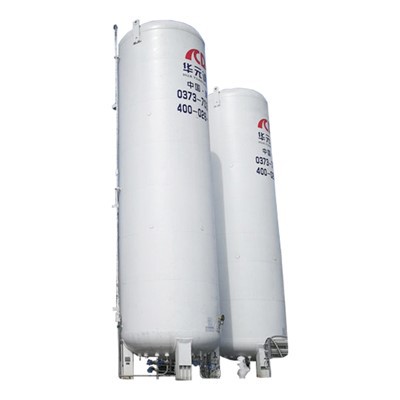
Liquefaction Storage Equipment As a supplier of small air separation units, we are committed to providing high – quality products and services to meet the diverse needs of our customers. If you are interested in purchasing a small air separation unit or have any questions about our products, please feel free to contact us for further discussion. We look forward to working with you to find the best air separation solution for your business.
References
- Smith, J. (2018). Air Separation Technology. Elsevier.
- Jones, A. (2020). Principles of Cryogenic Engineering. Springer.
- Brown, R. (2019). Non – Cryogenic Air Separation Methods. Wiley.
Xinxiang Jiale Intelligent Equipment Co., Ltd.
As one of the leading small air separation unit manufacturers and suppliers in China, we also support customized service. Please feel free to buy high quality small air separation unit for sale here from our factory. Contact us for more details.
Address: No.3913, 9th Floor, Unit 3, East Commercial and Office Complex, Baolong City Plaza, Hongqi District, Xinxiang City, Henan Province, China
E-mail: cc2397410@gmail.com
WebSite: https://www.jialeasu.com/
