Hey there, Residual Current Circuit Breaker
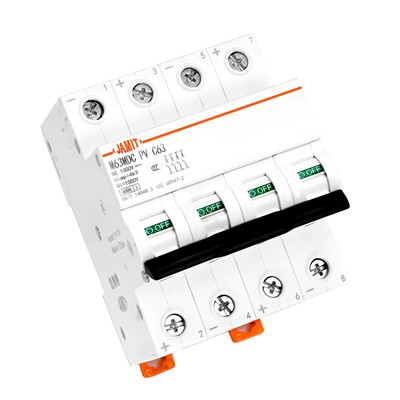
If you’ve ever taken a look inside a home’s electrical panel, you’ve probably spotted a Residual Current Circuit Breaker—more commonly called an RCCB or just RCD, depending on where you’re from. But here’s the thing: a lot of folks don’t realize an RCCB isn’t just a “set it and forget it” safety device. It’s a team player, working with every other component in your circuit to keep things running smoothly (and safely). As someone who’s been supplying RCCBs for years, I’ve talked to electricians, home owners, and even other suppliers who all miss that key interaction part. Today, let’s break down exactly how an RCCB plays nice (or, y’know, necessary) with the other bits in your circuit.
First, let’s start with the basics so we’re all on the same page. An RCCB’s whole job is to monitor current flow between the live (hot) wire and the neutral wire in a circuit. Under normal conditions, the current leaving the live wire is exactly the same as the current coming back on the neutral—so the RCCB just lets it pass through. But if even a tiny “residual” current escapes to the ground (like if someone touches a frayed live wire), that current won’t come back on the neutral. The RCCB detects that mismatch (even as low as 30mA—way lower than what could give you a bad shock) and trips in milliseconds, cutting power before anyone gets hurt. That’s the core, but now let’s layer in how it interacts with every other component around it.
Let’s start with the most obvious pairing: your main circuit breaker. Every panel has a main breaker that shuts off all power when you need to work on the panel, right? Here’s how the RCCB works with it: the main breaker is your “big safety net” for overcurrent—like when you plug too many space heaters into one outlet and draw more current than the wire can handle. RCCBs don’t do overcurrent protection; they only do residual current (that ground leak stuff). So you’ll usually find an RCCB “downstream” of the main breaker, protecting a specific circuit (like the kitchen outlets or the bathroom) instead of the whole house. I’ve seen mistakes where someone tries to put an RCCB in the main line, but that’s unnecessary and can even cause the main breaker to trip more often than it should. The main breaker carries the full load, and the RCCB adds that extra layer for personal safety. It’s like how a football team has a defensive line (main breaker) and a safety (RCCB)—they each have a role, but they have to line up right to work.
Next, your wiring. Let’s be real—wiring is the unsung hero here. The RCCB relies on the live and neutral wires being properly insulated and sized. If your wiring is old, frayed, or too thin for the circuit’s load, that’s a problem. I remember a call last year from an electrician who said his client’s RCCB kept tripping for no reason. Turned out the aluminum wiring in the old house was corroded, so small current was leaking through the corroded spots—way too tiny to cause a fire, but enough for the RCCB to see a mismatch. That’s a perfect example: the RCCB only acts on the data it gets from the wires. If the wires aren’t delivering accurate current numbers, the RCCB can’t do its job right. Also, if you install an RCCB on a circuit with undersized wiring, the wiring might overheat from overcurrent before the RCCB even notices—since the RCCB isn’t built for overcurrent. That’s why you always have to match the RCCB’s amp rating to the wiring and the loads. I tell all our supply customers to double-check that: a 15-amp RCCB goes with 14-gauge wire, 20-amp with 12-gauge. Skip that, and you’re asking for issues.
Then there are your loads—stuff like appliances, lights, power tools. How do RCCBs interact with your fridge, your TV, that power drill you use in the garage? Let’s take a standard kitchen outlet circuit: you have your RCCB feeding power to the outlets, which plug in your toaster, microwave, and coffee maker. Normal operation: live current goes to each appliance, neutral current comes back—same amount, RCCB stays closed. Now, say your toaster has a tiny, hidden fault where a live wire touches the metal frame (which is connected to ground). That’s residual current: some live current is escaping to ground instead of coming back on neutral. The RCCB spots that 30mA difference, trips instantly, and you don’t get a shock when you touch the toaster. But here’s a catch with certain loads: some have switching power supplies (like your laptop charger, LED lights) that create small “leakage currents” intentionally. Wait, does that make the RCCB trip for no reason? Sometimes. For example, a circuit with a lot of LED lights might have a total leakage current of 10-20mA—super low, but some RCCBs (especially older models) are sensitive enough to pick that up and trip unnecessarily. That’s why modern RCCBs have “high immunity” designs, and when we supply them, we always note which ones are better for circuits with lots of electronics. It’s all about matching the RCCB to the load—no one-size-fits-all here.
What about GFCI outlets? Wait, a lot of people mix up RCCBs and GFCIs. GFCI is a type of RCCB, right? But how do they work together if you have both in a circuit? Let’s say you have an RCCB protecting the entire bathroom circuit, and you plug a space heater into a GFCI outlet there. The RCCB will still handle big ground leaks that might spread across the whole circuit, and the GFCI will handle smaller leaks at the specific outlet. But wait—can they interfere? If you have an RCCB and a GFCI on the same circuit, you need to make sure the GFCI’s trip current is lower than the RCCB’s. If the GFCI trips at 5mA and the RCCB trips at 30mA, the GFCI will handle minor leaks, and the RCCB handles bigger ones. But if you mix them wrong, you might get nuisance tripping—where both trip when there’s no real danger. That’s something I warn every customer about: when designing a circuit with both, stick to the lower trip current for the local protection, and higher for the circuit-level protection. No guesswork here; just correct sizing and placement.
Now, what about the ground fault circuit interrupter (wait, no, we already covered GFCIs) and earthing systems? Oh right, the ground wire itself. An RCCB needs a proper earthing system to work correctly. If your home doesn’t have a good ground (like some older homes with two-prong outlets that skip the ground), the residual current can’t find a path to ground. So even if a live wire touches a metal frame, the current doesn’t leak, so the RCCB doesn’t trip. That’s a safety issue, full stop. When we supply RCCBs, we always remind electricians to check the earthing system first. It’s like having a fire alarm with no smoke detector—if the path for the “danger” signal is missing, the device can’t trigger. On the flip side, if the earthing system is faulty (loose ground wire, corroded), the RCCB might get false signals from stray current in the ground wire, causing it to trip randomly. That’s why regular testing of both the RCCB and the earthing is non-negotiable.
What about when things go wrong—like an RCCB tripping unexpectedly? How does that interact with other components? Let’s say your RCCB trips at 2 a.m., and you go to the panel to check. If the issue is a faulty appliance, unplugging that will let the RCCB reset. But if you have a short circuit, the main breaker might trip too, because the short draws way more current than the RCCB is built to handle. Wait—short circuits are overcurrent, not residual, so the RCCB doesn’t trip for shorts. That’s a key interaction: RCCBs and main breakers both respond to faults, but different types. So if you have a short, the main breaker takes out the whole circuit, and the RCCB handles the shock risk from ground leaks. I’ve seen electricians waste time replacing an RCCB when the real problem is a main breaker, or vice versa—knowing that difference saves time and money.
Another thing: compatibility with smart devices. More and more homes have smart meters, smart plugs, whole-home automation. How do RCCBs play with those? Smart devices often send small signals or draw steady, low current that can create minor imbalances. Most modern RCCBs are designed to work with smart tech, but cheap, old RCCBs might not be. For example, a smart thermostat connected to an RCCB that doesn’t have stable current sensing might cause small, unnecessary trips. That’s why when we supply RCCBs to customers building smart homes, we recommend our “smart-compatible” models—they adjust to small, intentional current fluctuations from electronics, so you don’t end up with a smart device that keeps turning off. It’s all about the RCCB’s internal sensor: newer models have digital sensors instead of old magnetic ones, so they’re more flexible with different loads and smart components.
Wait, let’s circle back to why this matters for you, whether you’re an electrician, a contractor, or a home owner picking parts. The RCCB isn’t a standalone safety gadget; it’s part of a system. If you skip understanding how it works with your main breaker, wiring, loads, earthing, and even smart stuff, you’re not installing a full safety solution. I’ve had a customer come to me once who installed a cheap RCCB on his kitchen, and it kept tripping because his induction range draws variable current. He switched to our industrial-grade RCCB (which handles fluctuating loads) and that fixed it. That’s exactly the interaction I’m talking about—match the RCCB to the other components, and it works. Skip that, and you’re wasting money and risking safety.
Let’s do a quick recap to make sure we didn’t miss anything:
- Main Breaker: RCCB pairs downstream for personal safety, main breaker handles overcurrent/full circuit control.
- Wiring: RCCB relies on intact, properly sized wires to get accurate current data; old/damaged wiring causes nuisance tripping.
- Loads: Electronic loads can add small leakage currents—modern RCCBs are tuned to handle that, while old ones may not.
- GFCIs/GFCI Outlets: Correct trip current sizing prevents conflicting tripping; they work together for layered safety.
- Earthing: Good ground path lets residual current trigger the RCCB; bad earthing kills the RCCB’s effectiveness.
- Faults (Shorts vs Ground Leaks): RCCB only handles ground leaks; main breaker handles shorts—know the difference.
- Smart Devices: Modern RCCBs are compatible, but cheap old ones cause issues with fluctuating smart load currents.
At the end of the day, an RCCB is only as good as its team. You could have the best RCCB on the market, but if your wiring is frayed, your earthing is bad, or you’re using it with a load it can’t handle, it won’t do its job. That’s why we don’t just sell RCCBs—we help customers figure out which model works with their specific circuit setup. Whether you’re wiring a new home, upgrading an old one, or just need a reliable replacement, we’ve got the RCCBs that play nice with all your other components, no guesswork.

If you’re working on a project and need to make sure your RCCB is the right fit for your circuit’s other parts—whether it’s main breakers, wiring, loads, or smart gear—reach out to chat. We can walk through your setup, recommend the right RCCB, and even answer any questions about how it interacts with your specific components. No sales jargon, just straight talk from someone who’s been in this game for years.
Miniature Circuit Breaker References
- "Residual Current Devices (RCDs): Application and Selection", International Electrotechnical Commission (IEC) Standard 60364-7-701, 2020.
- "Electrical Wiring and Grounding for Residential Applications", National Electrical Code (NEC) Article 250, 2023.
- "Smart Load Compatibility for Residual Current Circuit Breakers", Consumer Product Safety Commission (CPSC) Technical Report, 2022.
- "Troubleshooting Nuisance Tripping in RCCB Installations", Institute of Electrical and Electronics Engineers (IEEE) Transactions on Industry Applications, Vol. 58, No. 3, 2021.
Tianjin JMT Electric Co., Ltd.
Tianjin JMT Electric Co., Ltd. is one of the most reliable residual current circuit breaker manufacturers and suppliers in China, also supports customized service. Please feel free to buy advanced residual current circuit breaker made in China here from our factory.
Address: East Side of Road No. 6, Jinghai Economic Development Zone, Tianjin
E-mail: wangbing@tj-jamit.com
WebSite: https://www.jamit-electric.com/
