Hey everyone, it’s Jake from the automatic mochi production line team—you know, the people who help bakers and food brands stop hand-stretching mochi at 2 a.m. So many of you slide into our DMs asking the same question over and over: “How long does it actually take to set up one of these lines?” Like, I get it—you’ve got a big order, a pop-up, or maybe you’re finally ditching that crew team who keeps sticking mochi to their jeans, and you need a timeline that’s not just a vague “a few weeks” from some sales site. Let me break this down straight, no fancy jargon, just what we actually see go down every single week. Automatic Mochi Production Line
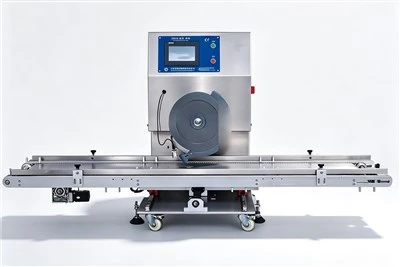
First off, let’s get one thing out of the way: it’s not a “one-size-fits-all” answer. A tiny bakery making 50 mochi an hour has way different needs than a snack brand cranking out 10,000 an hour for a national grocery chain. But let’s start with the average scenario—let’s say a mid-sized craft food brand, not a startup testing their first batch, not a huge factory. We talk in phases, mostly, because each step depends on stuff like shipping, custom tweaks, and how fast you can get your team trained. Let’s dive in.
Phase 1: Pre-Order Prep (That’s the Stuff Before You Even Buy the Line)
Wait, hold on—this is the part most people skip, and it’s why some setups take forever. A lot of us come to you fast-talking about the line itself, but you gotta figure out what you actually need before you sign on the dotted line. I can’t tell you how many times a week someone says “just give me a line that makes mochi!” and then a month later they’re like “um… wait, we need to fill them with red bean, right?” Oops.
So pre-order is usually 1 to 3 weeks, max, but sometimes longer. Here’s what happens here: we hop on a call with you, ask specific questions. Like, how fast do you need to run? What kind of mochi? Chewy rice cake? Filled? Ice cream mochi? Toasted mochi? Do you need it to wrap in plastic, or put it in trays? Also, your space—how much floor do you have? If you’re squeezing a 10-foot line into a 8-foot space, we’ve got to adjust, that takes time. And power—most people don’t realize these lines need specific voltage, not just a regular outlet. If your kitchen is set up for 110V and our line needs 220V, that’s an electrician thing before we even ship.
Also, this is when we do custom tweaks. Like, if you want your mochi to have a special shape—think heart-shaped for Valentine’s, or mini ones for kids’ snacks—we have to make custom molds for the wrapping part. That’s not a big deal, but it adds a couple days if you wait till this phase to decide. Last month, a confectioner we work with almost waited till after shipping, and we had to rush the mold, no extra charge, but it added 4 days to the timeline. Pro tip: tell us exactly what you want here, it saves everyone stress.
Phase 2: Production & Shipping (The Part You Wait For)
Once the order is locked, we build the line in our warehouse. That’s 2 to 4 weeks, depending on the size. Smaller lines for artisanal spots? 2 weeks, tops. Big, high-speed lines for national brands? 4 weeks, because we have to test every single part 3 times. We don’t just put it together and box it—we run test batches for 8 hours straight to make sure the mochi doesn’t stick, the filling doesn’t leak, the wrapping is tight, and it doesn’t break down mid-shift. No one wants a line that quits after 100 mochi, right?
Then shipping. This is the wildcard. If you’re in the US, ground shipping is 5 to 10 business days, but if you’re in another country? Customs delays. That’s real. We’ve had a client in Canada wait an extra week because customs decided to inspect the metal parts, and another in Australia wait 2 weeks because of a port backlog. So shipping is usually 5 to 14 days domestically, 14 to 28 days internationally. We always give you a rough estimate, but we don’t sugarcoat—stuff happens. Last quarter, we had 2 international orders delayed by 10 days total, but we were able to get them rushed through so the clients didn’t miss their launch.
Phase 3: On-Site Installation (The Big Day You’ve Been Waiting For)
Okay, so the line is at your door. Now what? Installation is usually 1 to 3 days. Wait, that’s it? Yeah, if we’re talking about a standard line. Here’s how it works: our techs fly out (or if you’re local, drive) with the line, and they start by uncrating everything. It’s not just one big box—small parts come in a few crates, so they connect all the motors, the mixing system, the filling unit, the wrapper. Then they hook up the power (which is why we asked about that earlier), and do a test run.
But here’s the catch: if you didn’t prep your space before we got there, this takes way longer. Like, if your floor isn’t level, the line will wobble, so the tech has to bring a leveler and spend an extra day adjusting. If there’s no drain nearby (for cleaning the mixing part), that’s another delay. We always send a pre-install guide so you can have your space ready, but sometimes people forget, so we have to improvise. Last month, a bakery in Chicago had their space half-filled with old ovens, so we had to wait a day for them to move stuff, making installation 2 days instead of 1. No biggie, but it’s avoidable.
Phase 4: Training & Trial Runs (The Part That Makes It Actually Work)
This is the most important part, and the one no one talks about. A line is useless if your team can’t run it. Training is usually 2 to 5 days, depending on how fast your crew picks things up. Our techs don’t just give you a 10-minute demo—they walk your whole team (not just one person) through every part. How to adjust the mochi thickness, how to fix a jam (super common, no big deal once you know how), how to change the filling if you switch flavors, how to clean it properly (hygiene is huge for food production).
Trial runs are during training, too. We run 3 to 4 test batches with your ingredients, so you can see how your mochi turns out, and tweak settings if needed. Like, if your red bean filling is extra sweet, we might adjust the amount the line dispenses, so it doesn’t leak. That’s why training takes a few days—you can’t do that in 2 hours. We’ve had a client in Texas whose crew picked up fast, so training was 2 days, and another in Japan whose team took a bit longer with the custom heart molds, so it was 5 days. That’s normal.
Wait, but what about the whole timeline? Let’s add it all up for that mid-sized craft brand, no delays: pre-order (1 week) + production (3 weeks) + shipping (1 week) + installation (1 day) + training (3 days) = roughly 5 weeks total. But with possible delays—customs, space prep, custom parts—it can be 7 to 9 weeks, max. I’ve never seen it take longer than 10 weeks, and that’s only if someone decides to change their order halfway through, which we try to avoid.
But hold on—what if you’re a tiny startup? Like, you’re baking mochi in your home kitchen and want a small countertop line, not a big industrial one. That timeline is way shorter. Pre-order is 3 days, production is 1 week, shipping is 3 days, installation is a few hours, training is 1 day. Total: 2 weeks, tops. We actually launched that small line last year for home bakers and small café pop-ups, and that’s been a game-changer for people who don’t need a full factory setup.
Now, let’s get real about the mistakes that make timelines longer. I see this all the time, so save yourself the headache:
- Waiting too long to decide on specs. If you wait till we’re packing your line to say “oh, we need to add a cooling tunnel,” that adds another week minimum, because we have to build and test that.
- Not prepping your space. No level floor, no power, no room to move the line—adds 2 to 3 days.
- Ignoring custom duties for international orders. We can’t control that, so make sure you have a customs person lined up if you’re outside the country.
- Only training one person. If your team has 3 people who know how to run the line, no one is stuck if someone calls out sick. Plus, it goes faster when more people are involved.
Wait, and what about after setup? Once the line is running, we’re here for any issues. We have a 24/7 support line, so if your line jams at 6 a.m. before a big delivery, you call us, and we walk you through it. No waiting till Monday for a tech. That’s part of the package, by the way, so you don’t get stuck troubleshooting alone.
I know a lot of vendors will tell you their line is “up and running in 3 days!” but that’s a lie. No line—especially for food, which has to meet safety standards—can be installed in 3 days, and be reliable. We test everything, we train your team, we make sure the mochi is good, not just that the line turns on. That’s why our clients come back, and why we don’t cut corners.
At the end of the day, the question isn’t “how long does it take to set up an automatic mochi production line?” It’s “how long do I want it to take, and am I willing to prep so it goes fast?” If you’re organized, tell us exactly what you need before you order, have your space ready, and train your whole crew, you can have your line running in 5 weeks. If you wait till the last minute, it’s going to be longer. Either way, it’s way faster than hand-making 10,000 mochi a day, trust me.
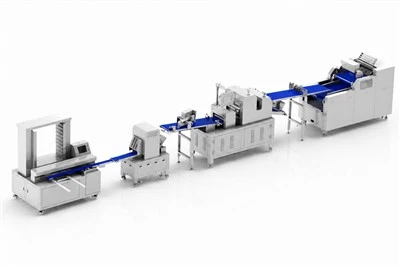
If you’re ready to chat about your specific setup—whether you’re a small café, a snack brand, or a bakery that’s tired of late nights with a rolling pin—hit us up to talk through your timeline and specs. No pressure, just straight answers, no sales pitches. We just want to help you make great mochi without the hassle.
- National Food Safety Foundation. (2022). Best Practices for Commercial Food Equipment Installation and Validation.
- Mochi Industry Association. (2023). Automated Production Line Efficiency Benchmark Report.
- Food and Drug Administration (FDA). (2021). Safety Standards for Automatic Food Production Equipment.
- Global Supply Chain Insights. (2024). Common Delays in Cross-Border Shipping of Industrial Food Equipment.
Shanghai Longyu Electro-Mechanic Technology Co., Ltd.
Shanghai Longyu Electro-Mechanic Technology Co., Ltd. is one of the most professional automatic mochi production line manufacturers and suppliers in China, featured by quality products and good service. Please feel free to wholesale advanced automatic mochi production line made in China here from our factory. Also, custom service is available.
Address: No.66, Guangfulin East Road, Zhongshan Subdistrict, Songjiang District, Shanghai, China
E-mail: sales4@longyu-sh.com
WebSite: https://www.longyu-sh.com/
